Five Essential Questions about the Future of Sports Linear Streaming

Pick a sport, pick a night. Chances are your most valuable fans aren’t watching on cable. They’re streaming, skipping to highlights, and scanning stats overlays on smart TVs. For media platforms and advertisers, live sports is the engine of attention, the last must-see programming, and the proving ground for new revenue science.
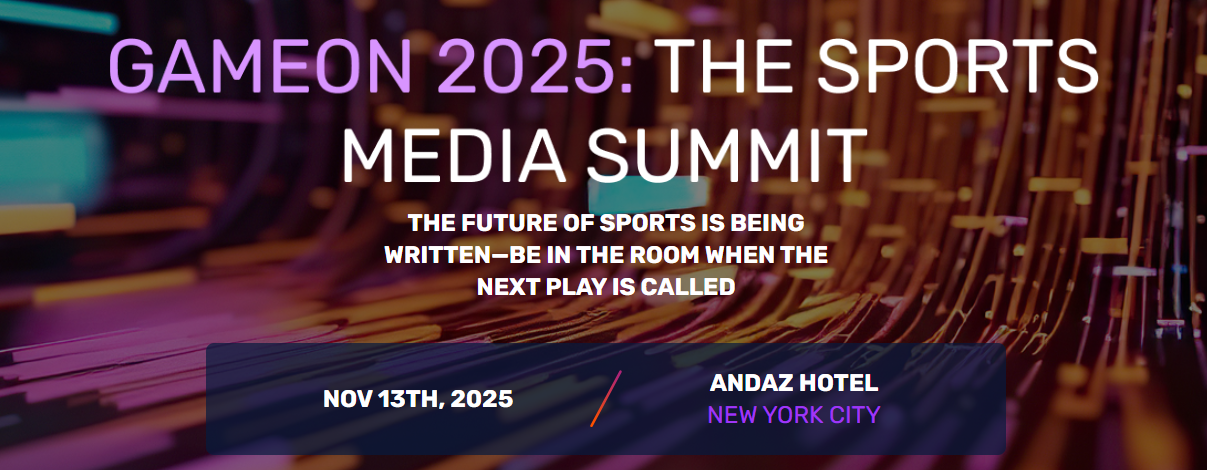
As you may have heard, Operative is gearing up to host GameOn, a one-day gathering of leaders across sports media who are redefining advertising strategies and revenue models for the streaming era. As we count down to the event, I want to share some of the big questions on my mind about what’s next for live sports in streaming.
1. What is the future of ad formats for live sports on connected TV?
The 30-second spot isn’t going away, but it’s no longer the center of gravity. Connected TV is expanding the canvas by offering new formats that blend interactivity, commerce, and storytelling in ways that simply weren’t possible in a linear environment.
We’re already seeing shoppable ads that turn sports moments into checkout buttons. QR code overlays that launch product pages mid-game. Interactive sponsorships that evolve based on audience response. The next frontier is immersive brand integration: formats that don’t interrupt the experience but become part of it.
Consider an apparel brand that sponsors a “Replay of the Game” segment, dynamically rendered for each viewer based on what plays they interacted with most. Or a home improvement brand that integrates into the broadcast via AI-generated graphic inserts tailored to the local market. These concepts are not fantasy. For instance, Twitch is already deploying AI-powered instant replay sponsorships in live streams, allowing brands to attach their messaging to engaging moments without interrupting the content. Perion’s “Stay Live” format uses AI to identify key live-sports moments, like touchdowns, and integrates branded overlays dynamically and seamlessly during those peak-engagement seconds.
The challenge, and opportunity, for media companies is to architect a monetization model that reflects this new creative complexity. These aren’t fixed units; they’re programmable, adaptive ad experiences. Pricing, packaging, and proving performance will require new measurement approaches and tighter coordination between content, ad ops, and sales.
2. How should media companies be thinking about gamification as they shift towards streaming of live sports?
Gamification is becoming core to building loyalty and engagement.
In linear, gamification lived on second screens, like fantasy leagues on mobile apps, betting platforms in browsers. But connected TV is changing that. Now, gamified elements can be integrated directly into the viewing layer: real-time player stats surfaced with a click; odds dynamically updating based on in-game action; interactive challenges that reward viewers for predicting the next touchdown or turnover.
ESPN’s DTC push is an example of how the fan journey is being rewritten with in-game odds, shoppable jerseys, bet lines, and side-by-side highlights drop live into the stream, not at the margins. Platforms turning every stat and play into a chance for interactivity pull fans deeper—longer watch times, more first-party data, and a pipeline of real-time zero-party signals for future targeting.
CTV is where betting overlays, sponsored fantasy leaderboards, and live polls can go from novelty to core format. With betting handle on the rise, every tap, wager, or poll entry can trigger a new set of dynamic ad spots or sponsorships, with results tracked and attributed.
For media companies, the shift requires rethinking the product stack. Are your rights deals flexible enough to support betting integrations? Is your tech stack ready to support frame-accurate overlays without latency? And perhaps most importantly: are your revenue teams equipped to price and sell inventory that responds to the viewer’s behavior in real time?
Media platforms that turn gamification into a value exchange will reward engagement, capture intent, and open up new buying strategies. They will have a stickier, more monetizable product than anyone simply streaming the game.
Connected TV represents a re-platforming of the entire live sports ecosystem. The formats are changing. The audiences are shifting. The rules are still being written.
3. How will AI and virtual advertising reshape live sports monetization?
Live sports inventory used to be a blunt instrument: one feed, one set of ads, mass reach. The new playbook is all about precision and multiplicity. AI-powered ad delivery now juggles concurrency at Super Bowl scale, serving creative based on minute-by-minute viewership data, performance modeling, and predictive churn signals. CTV platforms can target in real time, replace ad breaks on the fly, and verify delivery at household level. This is all a world apart from linear’s spray-and-pray.
Virtual advertising brings the physical world into the data era. One stream, thousands of experiences: Spanish viewers see a local retailer behind home plate, young cord-cutting NBA fans in Chicago get a sneaker drop in the paint, and neither group sees the other’s ad. Inventory flexes by region, demo, and device, all measured, all dynamic.
Winning here means moving fast. Every brand wants contextual presence, but only media owners who invest in smart orchestration, including real-time creative swaps, robust data partnerships, clean-room privacy, will have the goods that sponsors want tomorrow.
4. How is live sports converging with entertainment in ways that reshape monetization?
The game is the hook for hard-core sports fans, but the spectacle is the draw for many more. Look at Netflix’s “Beyoncé Bowl,” which was part NFL action, part pop-culture moment watched far beyond core fans. This is sports as omnichannel tentpole: sponsorships, exclusive merch drops, companion content, and surprise celebrity cameos all add new layers, and new revenue triggers, around live events.
In addition, YouTube’s first-ever exclusive NFL livestream exemplified how live sports are evolving at the intersection of entertainment, culture, and the creator economy, with a global superstar, Karol G, performing at halftime while creators like MrBeast and SKabeche added novelty entertainment to the experience.
The convergence of sports and entertainment unlocks new forms of value. Viewers who tune in for the spectacle stay for the story. Brands that sponsor halftime shows or crossover content are buying access to emotion, identity, and culture, not just impressions.
For media companies, this convergence demands a new approach to packaging and storytelling. It’s not just about pre-rolls and lower-thirds anymore. It’s about building integrated campaigns that extend across long-form content, social activations, behind-the-scenes footage, and live moments. It’s about thinking of the game as just one chapter in a larger, cross-platform narrative, and monetizing accordingly.
Expect advertisers to push for blended sponsorships, like deals that include in-game inventory, content sponsorships, and activations across entertainment properties. Rights holders and media companies with the best playbooks for hybrid events stand to monetize every piece of the experience.
5. How will the rise of women’s live sports unlock new monetization opportunities?
Women’s sports is more than a growth story. What’s changed isn’t just the audience. It’s the cultural positioning. Female athletes are more than competitors; they’re influencers and storytelling anchors. For advertisers, that means access to engaged fans who see women athletes as authentic voices.
As more events go CTV-first, underpriced inventory becomes hot property. Advertisers see the data: younger viewers, deeper engagement, fresh narratives that brands want to own. Programmatic is accelerating the shift, bringing in challenger brands, new spending categories, and dynamic pricing models that finally reflect demand surges, especially around playoff runs, viral highlights, or record-smashing athletes.
A smart strategy here leverages the advanced audience targeting, creative integration (think athlete campaigns and contextual overlays) and frameworks so sponsors can activate authentically, not just at budget-friendly CPMs but with measurable impact and long-term association.
Ready to Compete?
Connected TV represents a re-platforming of the entire live sports ecosystem. The formats are changing. The audiences are shifting. The rules are still being written.
Media companies that want to lead in this environment should stop thinking in terms of what worked in linear and start asking harder strategic questions about where the next growth curves will emerge. Fans choosing CTV aren’t waiting for traditional media to catch up. The upside is real, the playbook is wide open, and the next move is yours.